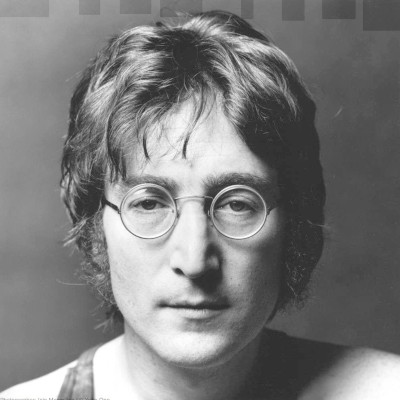

John Lennon

John Lennon

Style marker

Mordents

Mordents and turns are common embellishments for Lennon [...].

Walter Everett, The Beatles as Musicians, Vol. 1 (2001), p. 72

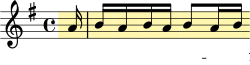
Many Beatles songs written by John Lennon contain mordents in the vocal melody: a note briefly ornamented by an adjacent scale degree before returning to the original note. He often places them near the ends of phrases where they're followed by a downward resolution to the tonic.

Transcript of a line from John Lennon/The Beatles's 1963 song Ask Me Why.
Ask Me Why (1963)
Transcript of a line from John Lennon/The Beatles's 1963 song Please Please Me.
Please Please Me (1963)
Transcript of a line from The Beatles's 1963 song There's a Place.
There's a Place (1963)
Transcript of a line from The Beatles's 1963 song All I've Got To Do.
All I've Got To Do (1963)
Transcript of a line from The Beatles's 1963 song Not a Second Time.
Not a Second Time (1963)
Transcript of a line from The Beatles's 1964 song I Call Your Name.
I Call Your Name (1964)
Transcript of a line from The Beatles's 1964 song I Should Have Known Better.
I Should Have Known Better (1964)
Transcript of a line from The Beatles's 1965 song In My Life.
In My Life (1965)
Transcript of a line from The Beatles's 1965 song Nowhere Man.
Nowhere Man (1965)
Transcript of a line from The Beatles's 1967 song Strawberry Fields Forever.
Strawberry Fields Forever (1967)
Transcript of a line from The Beatles's 1968 song Sexy Sadie.
Sexy Sadie (1968)
Transcript of a line from The Beatles's 1969 song Because.
Because (1969)

These ornaments are common in many styles of music, but they distinguish Lennon from his bandmates Paul McCartney and George Harrison, who use them much less often. Lennon himself uses them most in his R&B-inspired songs from the early '60s.

There are also conspicuous vocal mordents in "Do You Want To Know A Secret," which was sung by Harrison but written by Lennon.

References in later music

The Beach Boys

It was clear that the Beach Boys were listening to the Beatles in 1964; [...] [Brian] Wilson adopted Lennon's mordent in such songs as "Don't Worry Baby" and "You're So Good To Me."

Walter Everett, The Beatles as Musicians, Vol. 1 (2001), p. 276

Transcript of a line from The Beach Boys's 1964 song Don't Worry Baby.
The Beach Boys' Don't Worry Baby (1964)
Transcript of a line from The Beach Boys's 1965 song You're So Good To Me.
The Beach Boys' You're So Good To Me (1965)
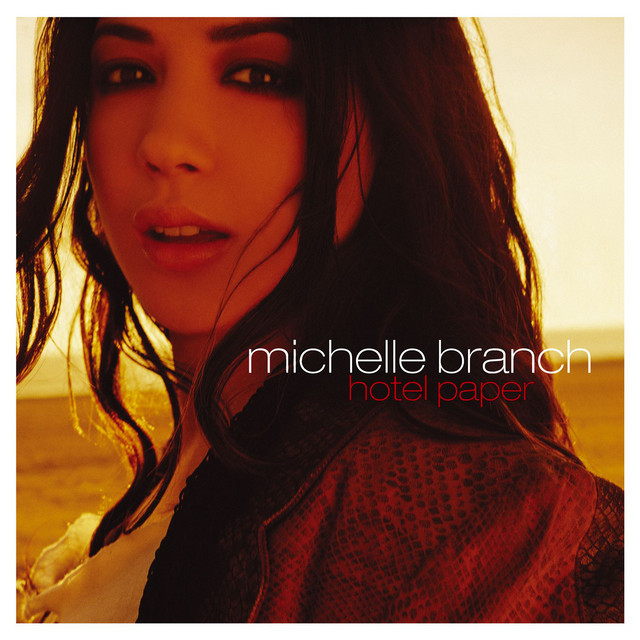
The Beatles are one of my favorite groups.

Michelle Branch, website bio (2001)

Transcript of a line from John Lennon's 1968 song Happiness is a Warm Gun.
Transcript of a line from Michelle Branch's 2003 song 'Til I Get Over You.

These songs share

  • The key of E minor
  • Verse melodies that alternate 2̂ and 3̂ in a similar rhythmic pattern
  • Lyrical reference to a gun, unusual in the work of Michelle Branch

Something to add?

Email songpatterns@gmail.com with any additions or corrections.